

The growth was led by family-owned companies and business groups with presence in pharmaceuticals, information technology services, and consumer products.

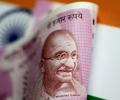
Rs 1,000 now buys $13.5 against $14 a year ago.

'Valuations were depressed at 8,000 (Nifty 50 index) levels. It was a free ride to 12,000 levels.' 'What went down had to come up. Now fundamentals have to support further gains.'

The year-to-date returns are 13.33 per cent for Indian funds, compared to 11.66 per cent for emerging market funds overall.

Reliance Industries accounted for Rs 6.3 trillion in wealth created since 1995; closest rival was Hindustan Unilever which was at Rs 4.9 trillion.

Some analysts see more upside in FMCG stocks given the performance gap between the sector and the market.
Business Standard tracks pollution levels, goods ferried by the Indian Railways and consumer visits to various categories of places, in addition to power generation and traffic numbers to understand the fast-changing situation on the ground.
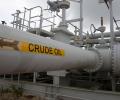
There is positive correlation between crude oil prices and Indian equities and investors can expect more upside after the recent rally in Brent crude price.

'We have filed our draft red herring prospectus for a floating IPO for a net offer size of 86.6 million shares.'
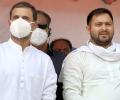
Pages for the Bharatiya Janata Party's Bihar arm (BJP Bihar), Janata Dal-United, and Chirag Paswan (of the Lok Janshakti Party) saw between Rs 15 lakh and Rs 30 lakh in ad spends.

Not surprisingly, equity investors are bidding-up stock prices across sectors and the broader market is now more valuable than pre-Covid levels.

Thomas Isaac has been in and out of the national news in his role as Kerala's finance minister since 2018 for various path-breaking tax initiatives. But it is 2020 that he has become more prominent, principally in the GST council.
Completed projects saw an improvement of 29.2 per cent over the June quarter, which is valued at Rs 0.31 trillion.

The project will be in three stages and sources indicate that the funding will be for the first stage of 107 kilometre from Sarai Kale Khan to SNB Urban Complex.

22 companies won bids for the 31 contracts on offer; 15 were new entrants to the oil and gas business. Three years on, none of them have started production.
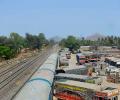
Revenue from freight operations also increased by 14 per cent to Rs 9,903 crore in September.

Going by the current market cap of Rs 83,451.15 crore, 7.33 per cent stake in BPCL is expected to be valued around Rs 6,117 crore.
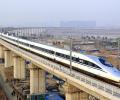
The first consortium includes Afcons Infrastructure, IRCON International and JMC Projects, while the second group of companies include NCC, Tata Projects and J. Kumar Infra Projects.

The Rail Land Development Authority has invited online bids from private players to redevelop the station into an integrated commercial, retail, and hospitality hub.
